Table of Contents
LEGO Ideas Scooby Doo-a Night of Fright Is No Delight! has now reached the 10,000-supporter milestone, which sends the fan project into the official LEGO Ideas review process. That alone makes it notable, but the bigger reason this one matters is context. Unlike many Ideas submissions built around a licence LEGO has never touched, Scooby-Doo is not new territory for the company. LEGO already released a short but memorable wave of official Scooby-Doo sets in 2015, including 75900 Mummy Museum Mystery, 75901 Mystery Plane Adventures, 75902 The Mystery Machine, 75903 Haunted Lighthouse, and 75904 Mystery Mansion. So this project does not just argue that Scooby-Doo could work as a LEGO set in theory. It argues that fans still want LEGO to revisit a theme that once already proved it had a natural place in brick form.
The project itself is based on the classic Scooby-Doo episode A Night of Fright Is No Delight, a choice that immediately gives it a stronger hook than a generic haunted house tribute. Instead of vaguely borrowing from the franchise’s spooky-comedy identity, it recreates a very specific story setup from the original series.
What this LEGO Ideas Scooby-Doo project is based on
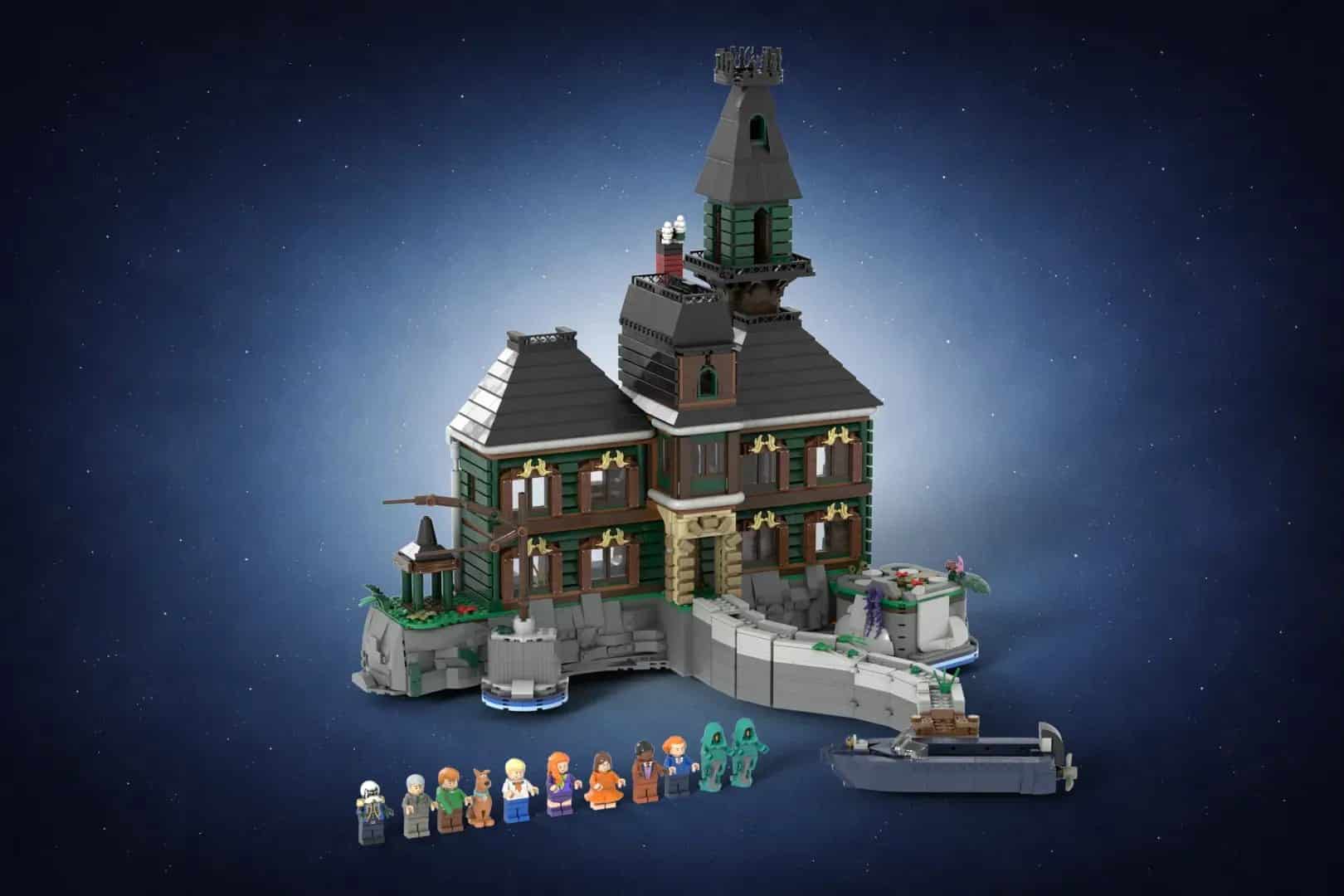
Creator Icerlot says the build is inspired by the 1970s episode A Night of Fright Is No Delight. In that story, the Mystery Inc. gang travels to the mansion of Colonel Sanders after Scooby-Doo is named in the will. The catch, naturally, is that they must endure a night in a haunted mansion before the inheritance can be resolved.
That is exactly the kind of Scooby-Doo setup that translates well into LEGO. It blends a recognizable location, trap-heavy interior action, comedy, and a built-in cast of suspects and ghosts. In other words, it already behaves like a toyetic mystery box before LEGO even gets involved.
The build goes big on play features and characters
According to the official project description, this fan model includes 3,333 pieces and 11 minifigures, all tied to the same episode. The line-up includes Scooby-Doo, Shaggy, Fred, Daphne, Velma, two ghost characters identified by the creator as Mr. Crawls and Cosgood Creeps, Cousins Simple and Slicker, plus an extra ghostly Colonel Sanders reference.
The play features are a major part of the pitch. The creator highlights:
- a boat,
- a collapsing pipe that sends Shaggy to the cave,
- a hidden bathroom passage for Scooby,
- a wine rack that fires corks,
- a chandelier-triggered drop to the cave,
- and Scooby and Shaggy’s flying washing machine.
That is a very deliberate choice. Rather than aiming for a static collector display only, the project leans into the slapstick, traps and secret-passage energy that made the original Scooby-Doo wave feel so charming in the first place.
Why the existing LEGO Scooby-Doo sets matter here
This is where the article gets more interesting than a standard 10K report. LEGO has already shown that Scooby-Doo works as a set theme. The original wave may have been short-lived, but it covered a strong range of formats:
- 75900 Mummy Museum Mystery
- 75901 Mystery Plane Adventures
- 75902 The Mystery Machine
- 75903 Haunted Lighthouse
- 75904 Mystery Mansion
That matters because the case for this Ideas project is not starting from zero. Fans already know what official LEGO Scooby-Doo minifigures look like. They already know the Mystery Machine works in LEGO form. They already know haunted locations, traps and mystery-driven play fit the brand unusually well.
In that sense, this new 10K project feels less like a speculative licence request and more like a revival pitch. It asks whether there is room for LEGO to revisit Scooby-Doo after a long gap rather than whether the licence makes any sense at all.
This project chooses a smarter angle than just remaking the Mystery Machine
Another reason the project stands out is that it does not simply recycle the safest icon from the theme. A lot of fan pitches would probably default to another Mystery Machine set or a broad gang-and-van package. Instead, this one goes for an episode-specific haunted mansion scenario.
That gives it a better chance of feeling distinct from what LEGO already released. It also fits how Ideas projects often succeed: by taking a known property and presenting a focused, self-contained version that can stand on its own.
If LEGO ever were to revisit Scooby-Doo through Ideas, a location-based set with a full cast and multiple interactive features is arguably a stronger proposal than a simple nostalgia rerun.
Could LEGO actually bring Scooby-Doo back through Ideas?
Reaching 10,000 supporters does not guarantee anything beyond review. LEGO will still have to consider licensing, commercial timing, overlap with past products, build execution, and whether the project fits the current product portfolio.
There is also the obvious complication that having released a theme before does not automatically mean LEGO can or wants to revive it now. Licences change, priorities change, and Ideas approvals can be harder for previously explored properties than fans expect.
Still, this project has one advantage many 10K submissions do not: it supports an argument that already has historical evidence behind it. Scooby-Doo was not a theoretical success for LEGO. It was a real one, even if brief.
The main takeaway for Scooby-Doo fans
Scooby Doo-a Night of Fright Is No Delight! reaching 10,000 supporters is not just another Ideas milestone. It is also a reminder that there is still visible fan demand for a LEGO Scooby-Doo comeback.
By centering a classic haunted mansion episode, packing in traps and characters, and arriving with the weight of the earlier official wave behind it, the project makes a cleaner case than most nostalgia-driven Ideas submissions. Whether LEGO approves it is another matter entirely. But if the company ever wanted proof that Scooby-Doo still has supporters in the LEGO community, it now has one more strong example sitting in the review queue.
Source: LEGO Ideas – Scooby Doo-a Night of Fright Is No Delight!