Table of Contents
The LEGO Group has unveiled new details about its future U.S. factory in Virginia, including a major on-site solar park that will significantly increase the facility’s renewable energy capacity. According to the company, the project will include more than 30,700 ground-mounted solar panels spread across nearly 80 acres, alongside more than 10,000 rooftop panels installed on the factory buildings themselves. The announcement is important not only because it highlights construction progress at LEGO Manufacturing Virginia, but also because it gives a clearer idea of how the company wants to position the site: large-scale, highly automated, and strongly aligned with its wider sustainability ambitions. LEGO also says the workforce tied to the site is expected to grow from more than 500 people today to around 900 by the end of 2026.
The new announcement gives one of the clearest snapshots yet of what LEGO’s Virginia facility is meant to become. The Chesterfield County site is not just another distribution point or regional office expansion. It is being built as a major long-term manufacturing hub, backed by more than US $1.5 billion in combined investment across the factory and regional distribution center.
That already made the project important for LEGO’s North American strategy, but the new solar plans push the story beyond construction milestones and into a broader conversation about energy use, automation and sustainable manufacturing. In other words, this is not just a factory update. It is a statement about how LEGO wants one of its biggest future production sites to operate.
LEGO is planning a major on-site solar park for its Virginia factory
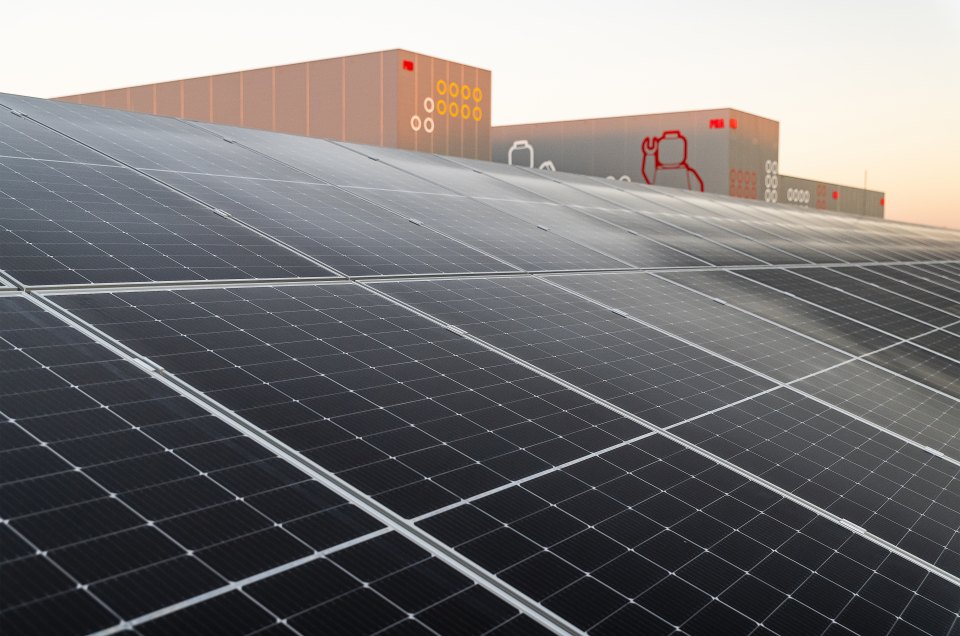
The headline figure is the solar park itself. The LEGO Group says it plans to install more than 30,700 ground-mounted solar panels at the Virginia site, with a total capacity of 22 MWp. The solar park is expected to cover nearly 80 acres and construction is currently scheduled to begin this summer.
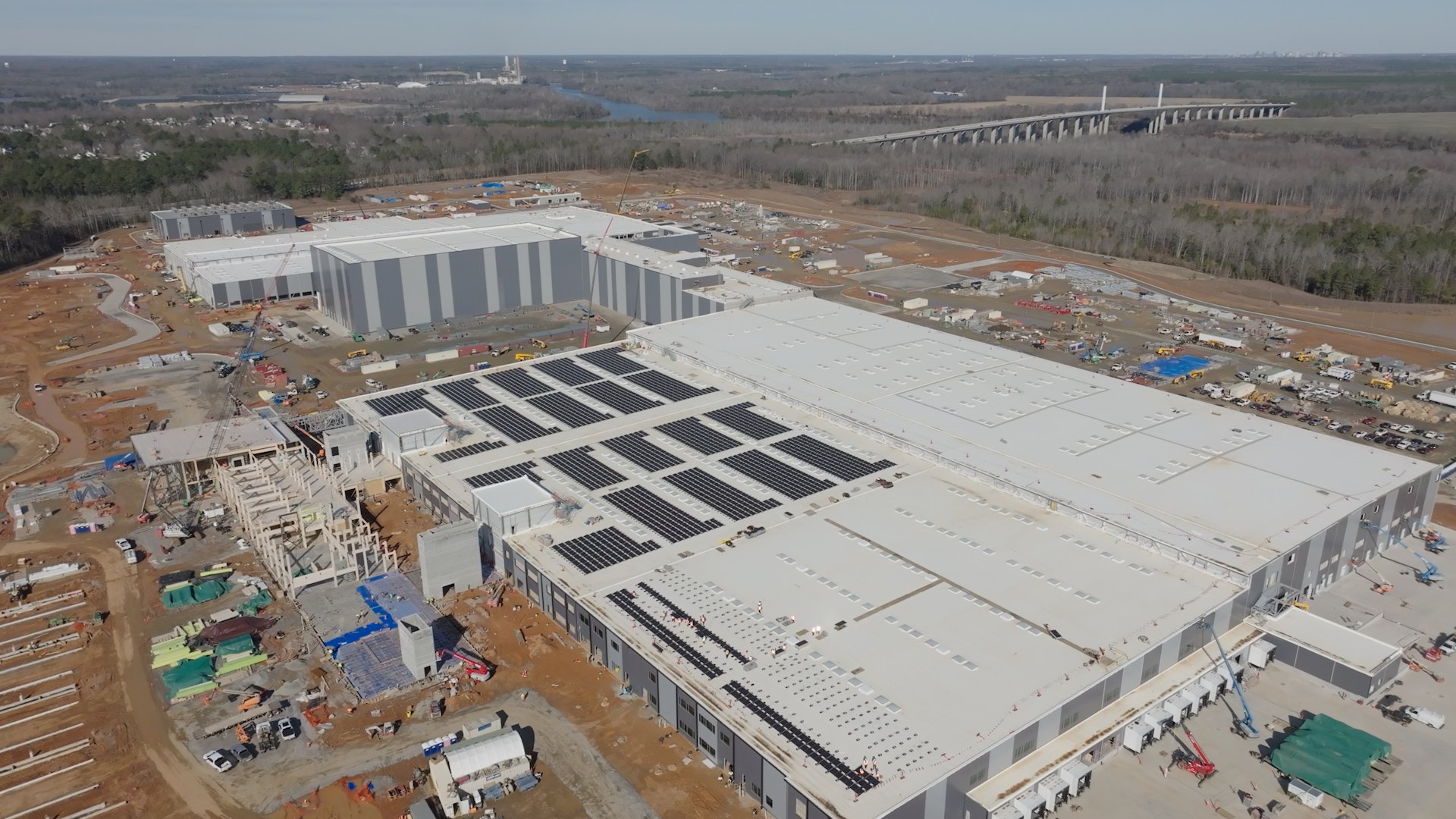
On top of that, LEGO also plans to install 10,080 rooftop solar panels across its buildings at the site, adding another 6.11 MWp of capacity. Combined, that gives the future factory a substantial on-site renewable energy footprint and moves it closer to the company’s stated ambition of sourcing 100% renewable energy for the facility’s annual needs.
The factory itself is still on track for its next big milestones
The solar update also doubles as a construction progress report. LEGO says work remains on schedule following the site’s steel topping out milestone in October 2025. The office portion of the project, which is being built using mass timber, is expected to reach its own topping-out milestone later this spring.
That mass timber choice is notable because LEGO specifically frames it as part of the site’s sustainability strategy. Unlike more conventional structural materials, mass timber is highlighted as a renewable resource that can sequester carbon rather than releasing it, while also contributing to the goal of reducing non-renewable material use and minimizing energy consumption.
In practical terms, the message is clear: LEGO wants this site to be seen not only as a large industrial build, but as a future-facing one. That matters because the Virginia factory is due to play a major role in serving the U.S. market, and the company appears keen to show that expansion and sustainability are being developed in parallel.
Team size is expected to nearly double by the end of 2026
Alongside the sustainability headlines, LEGO also shared an important workforce update. More than 500 team members currently work across the factory under construction and the company’s temporary packing facility. By the end of 2026, that number is expected to rise to around 900.
The company says that hiring growth is linked to preparations for highly automated molding and packing operations. That is a useful reminder that the Virginia site is not just a symbolic investment. LEGO is actively staffing for a large manufacturing operation that is intended to support long-term regional production.
Looking even further ahead, LEGO says the full project is expected to create more than 1,700 jobs over 10 years. For a facility covering 340 acres and roughly 1.7 million square feet of buildings, that scale is not surprising, but it does underline how strategically important the site is for the company’s future in the United States.
Community funding and sustainability targets remain part of the story
LEGO is also continuing to connect the Virginia factory project to its local community messaging. In February 2026, the company announced more than $1.3 million in grants for eight nonprofit organizations in the Greater Richmond region. Since 2022, LEGO says it has provided more than $3.5 million in grants in the area, funded by the LEGO Foundation.
On the factory side, the sustainability goals remain ambitious. LEGO says the site is aiming for LEED Platinum certification once completed, while also maintaining the company-wide ambition of zero waste to landfill from factory operations. The new solar park is only one piece of that plan, but it is probably the most visible and easiest to communicate.
That visibility matters. Solar capacity, panel counts and acreage are easy figures to understand, and they help turn a long construction story into something more tangible. For LEGO, that is useful both from a public relations standpoint and from the broader message that large-scale manufacturing investment can still be presented through a sustainability lens.
Why this Virginia factory matters for LEGO in the U.S.
The Virginia site matters because it reflects how LEGO is reshaping its U.S. footprint. The company already moved its U.S. headquarters to Boston and opened its Consumer & Shopper Engagement office in Tempe in 2025, while the Virginia facility represents the production side of that wider investment.
In other words, LEGO is not just expanding sales and office operations in the United States. It is also building deeper manufacturing capacity, distribution infrastructure and local employment around one of its biggest markets. The new solar park announcement fits neatly into that picture, showing that the company wants this factory to be framed as both industrially important and environmentally forward-looking.
For LEGO fans, this is not the kind of announcement that immediately reveals a new set or theme. But it does matter. Factories shape the long-term backbone of the business, and the Virginia project increasingly looks like one of the most important physical investments LEGO is making in North America.
You can read the original LEGO press release here on LEGO’s newsroom.