Table of Contents
BrickLink Designer Program Series 10 now has its five crowdfunding finalists, giving LEGO fans a first clear look at the next wave of fan-designed sets moving toward production. The newly announced lineup mixes western, city, retro space, medieval, and Parisian street-life inspiration, which makes this one of the broadest finalist selections the program has had in a while. The next major step is the crowdfunding round on February 1, 2027 at 8 AM Pacific time, when BrickLink members will be able to pre-order the finalists. According to the official Series 10 timeline, sets that pass the required pre-order threshold will then move into a one-time production run before shipping is expected around July 2027. Until then, the finalists will go through refinement work with the BrickLink and LEGO teams.
BrickLink has officially revealed the five finalists in Designer Program Series 10, and the selection feels intentionally varied. Rather than leaning too heavily into a single theme, the lineup spreads across several familiar AFOL sweet spots: a detailed western train station, a large urban firehouse, a colorful retro-futuristic café, a medieval jousting arena, and a much smaller but charming Parisian kiosk.
That broad mix matters because the BrickLink Designer Program works best when it offers very different reasons to pre-order. Some fans want a display-heavy centerpiece, some want a city-compatible modular-style build, and others are looking for a smaller project with a more accessible footprint. Series 10 seems built to test all of those lanes at once.
The official timeline is now clear. After the finalist reveal, BrickLink will spend the coming months refining the projects with the designers. The big public sales step will be the crowdfunding round starting on February 1, 2027 at 8 AM Pacific. BrickLink also states that buyers will be limited to two copies of each set per household, and that finalists which reach more than 3,000 pre-orders will be produced. Shipping is currently targeted for July 2027, roughly six months after pre-ordering.
Here is a closer look at each of the five Series 10 finalists.
Wild West Train Station brings classic frontier storytelling
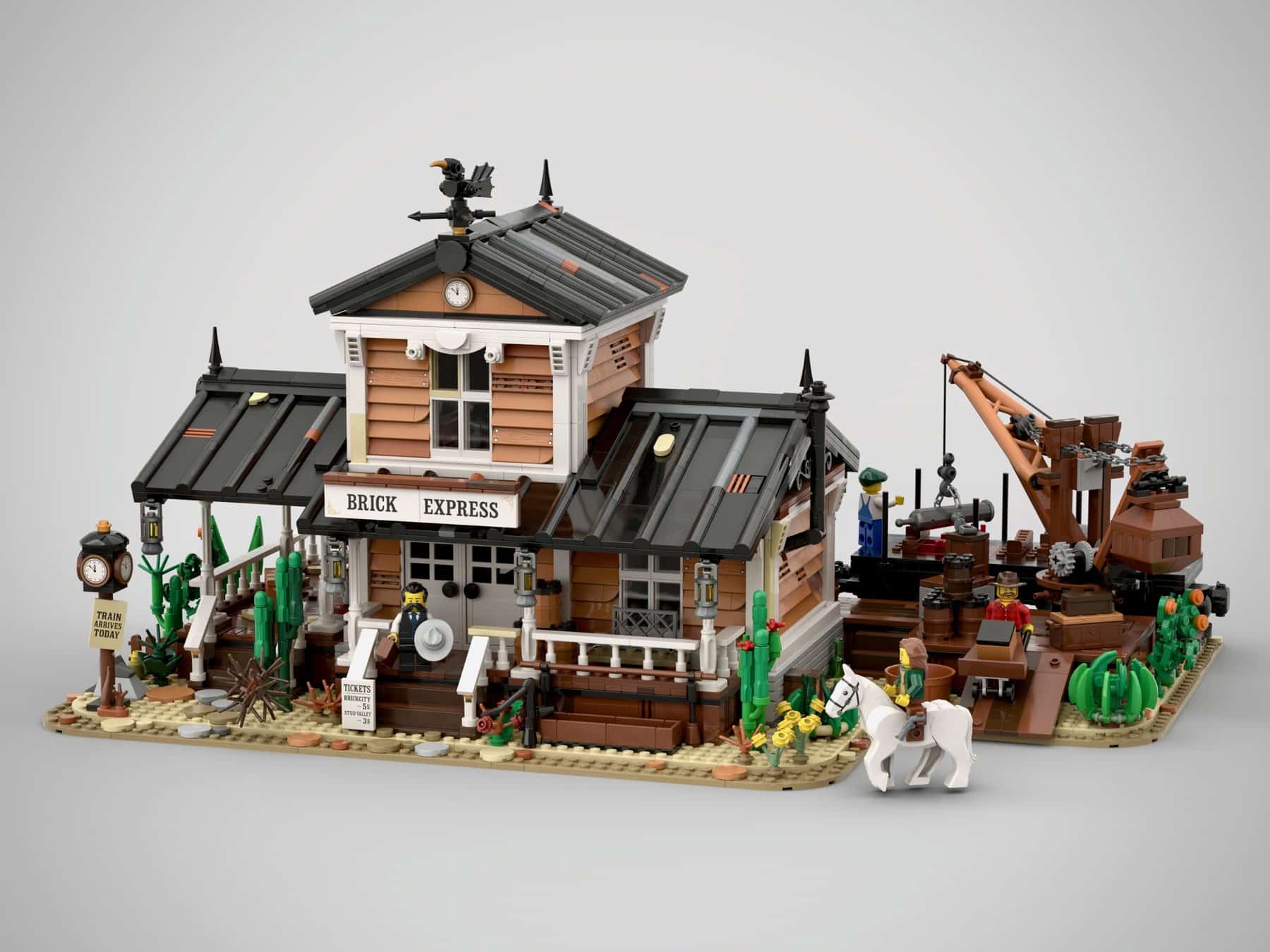
Wild West Train Station by llucky is probably the most cinematic project in the Series 10 lineup. Built with 3,184 pieces and 7 minifigures, it recreates a frontier station in Lucky Town, complete with a wooden cargo crane, a short section of track, freight details, and a two-storey station building filled with western character.
The design looks especially strong because it is not just a façade. BrickLink’s official description highlights a ticket office, parcels and cargo on the ground floor, and a furnished stationmaster’s office upstairs. That gives the model both display value and enough interior storytelling to feel like a complete scene rather than just a shell for photographs.
For train fans and western fans alike, this is the kind of project that could sit comfortably beside classic LEGO train layouts while also working as a standalone historical display. It feels like one of the safest bets in the lineup if voters want a large, theme-rich set with a clear identity.
Firehouse aims squarely at city builders
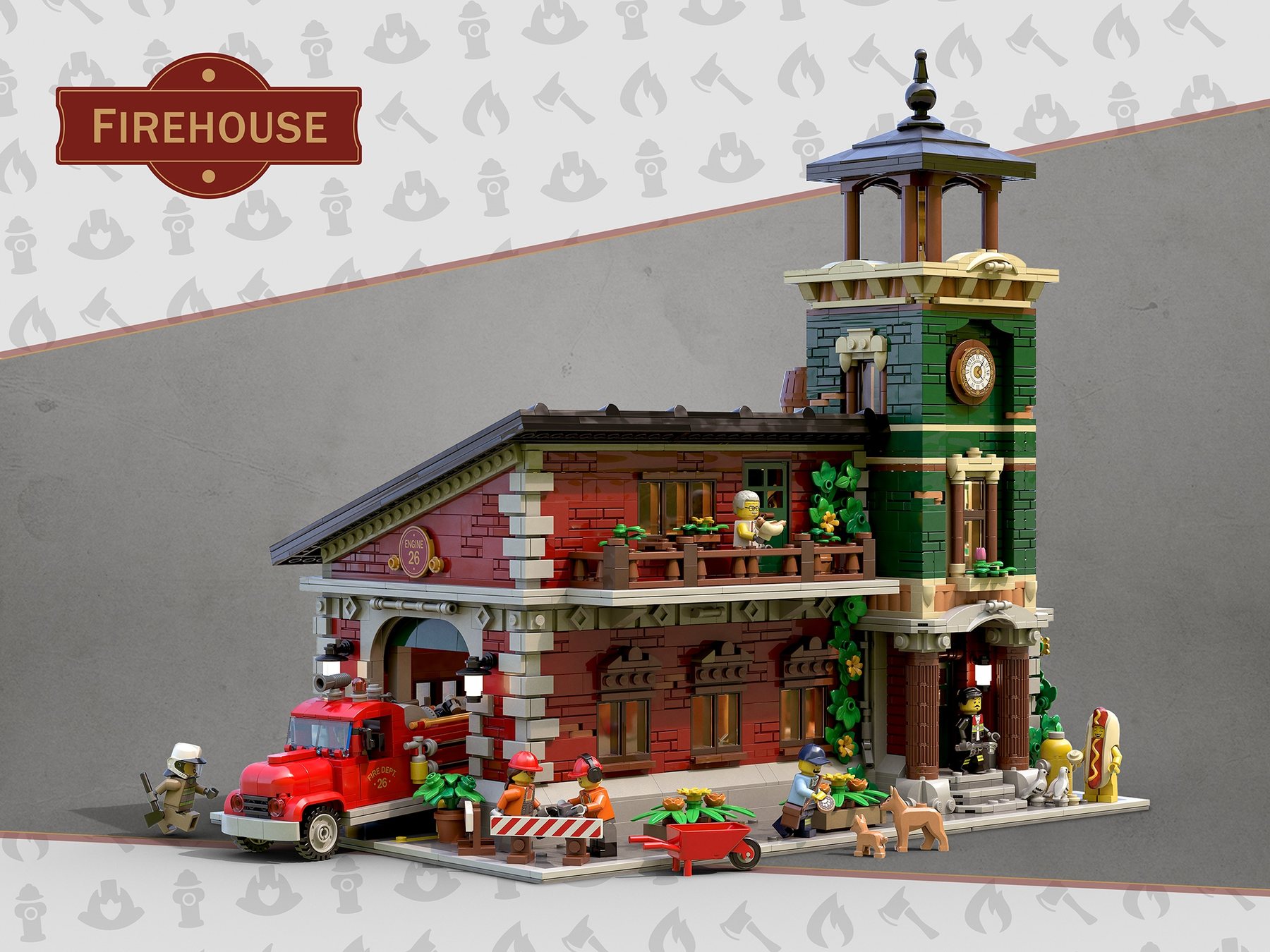
Firehouse by brickhucker goes after a very different audience. With 2,998 pieces and 10 minifigures, this finalist is designed as a substantial city display and play set, laid out on a 32×32 baseplate with an attached 16×32 extension. That footprint alone makes it immediately relevant to LEGO city builders who want something larger and more eventful than a standard modular side building.
The headline feature is a working garage door operated by a crank, paired with a vintage fire engine and accessible interiors. The description also points to a dispatch area, kitchen, equipment rooms, reception zone, and several street-life details outside, including construction workers and a hotdog vendor. That combination of vehicle space, interior rooms, and busy pavement activity gives the model a lot of life.
If BrickLink buyers want a finalist that feels close to a premium fan-designed city release, Firehouse should be a strong contender. It has the practical advantage of fitting naturally into an existing city layout while still looking large enough to justify a BrickLink Designer Program price point.
The Space Café adds retro-futuristic personality to the selection
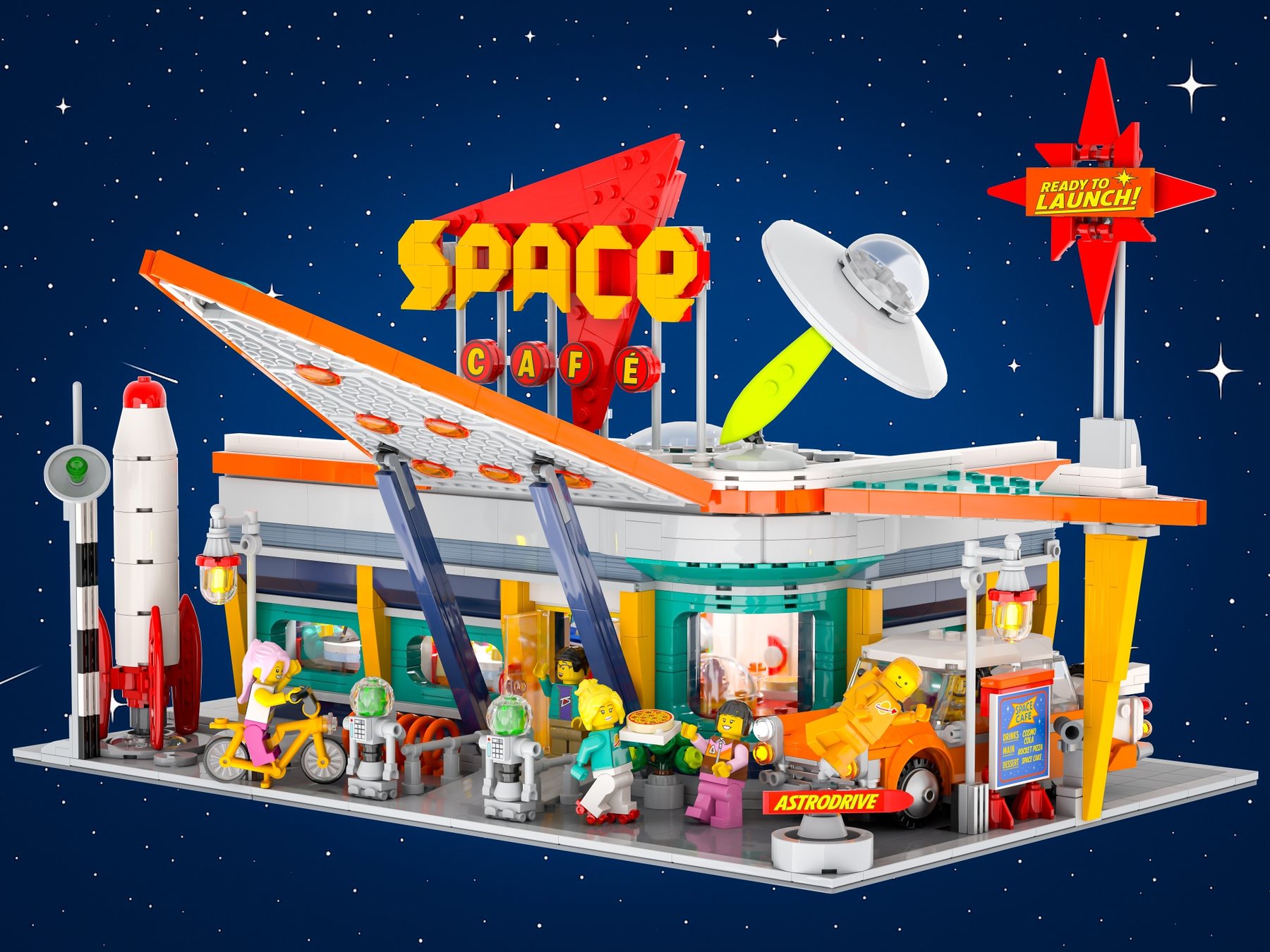
The Space Café by rocknbricks31 may be the most visually distinctive finalist of the five. At 2,545 pieces and 8 minifigures, it combines city-building appeal with a playful space-age aesthetic inspired by Atomic Age American architecture. The result looks like a roadside diner, an arcade, and a retro spaceship collided in the best possible way.
According to the designer’s notes, the project is meant to resemble a spacecraft or space station, with wing-like roof forms, porthole-style windows, a rocket sign, and a UFO accent. Inside, the café reportedly includes a kitchen, arcade machines, tables, and even an escape-pod-themed restroom. The set also sits on a 48×32-stud base, which means it is substantial without drifting into oversized display-only territory.
This one could do especially well if pre-order voters want something fresh rather than purely nostalgic. It still connects to familiar LEGO city habits, but the color palette and 1960s retro-space mood help it stand apart from more conventional modular-style builds.
The Joust leans into the enduring popularity of LEGO castle
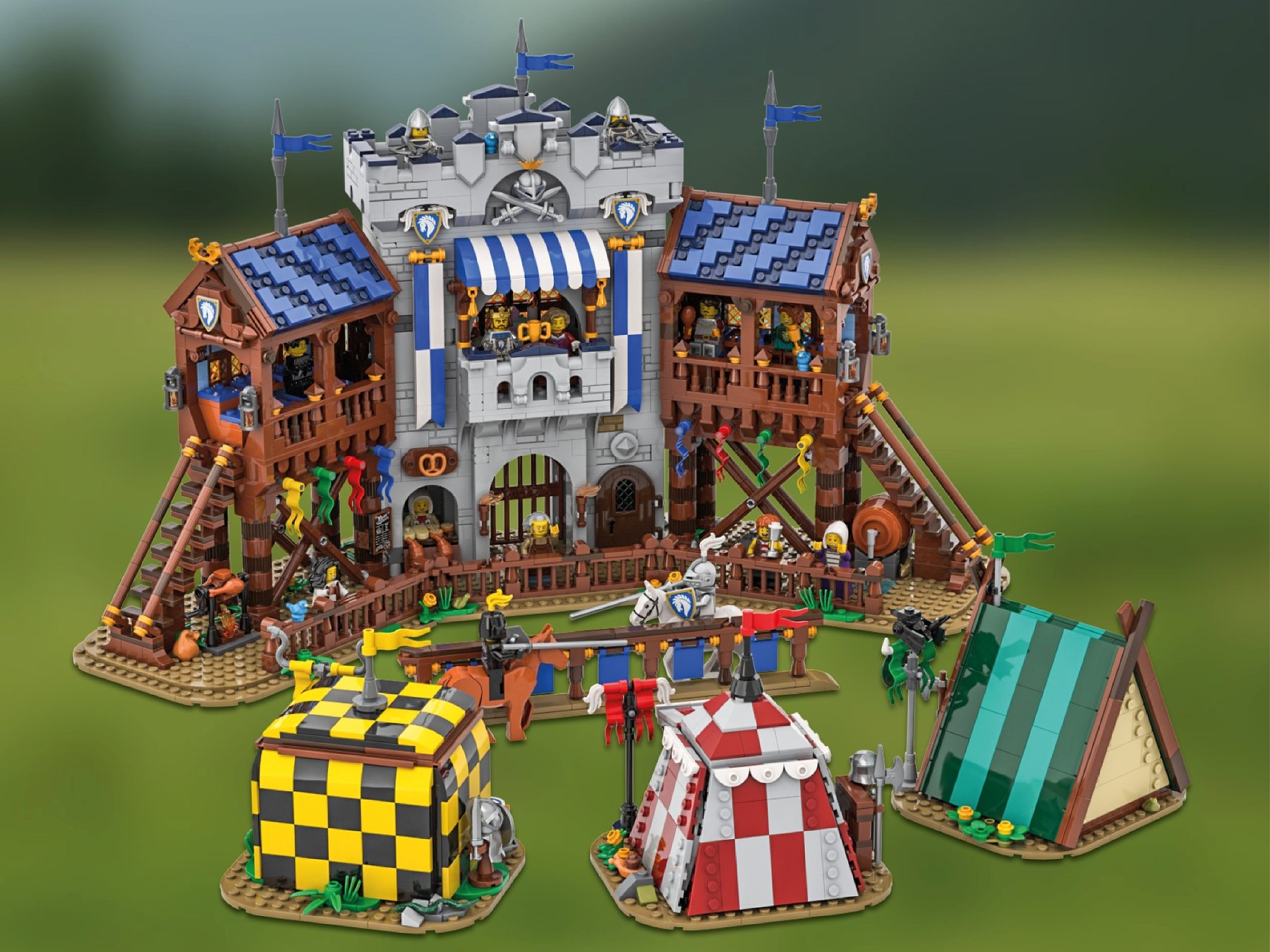
The Joust (Medieval Tournament) by moccermommy feels like the obvious crowd-pleaser for castle fans. It uses 3,099 pieces and includes 11 minifigures, making it one of the most figure-rich finalists in the series. Its layout centers on a fortified gatehouse and a jousting track, with grandstands, banners, faction tents, and spectator space built around the tournament setting.
BrickLink’s description emphasizes both display presence and playability, which is exactly what this theme needs. Functional features include a gate, removable roofs, a removable upper gatehouse section, separate faction tents, and a detachable snack stand. Those details suggest a model that can deliver more than a single static pose once it reaches builders’ shelves.
Castle remains one of the most reliable themes whenever AFOL voting is involved, so this finalist should be watched closely. The question is not whether fans like it, but whether enough buyers will prioritize it over the equally large western and city options when crowdfunding opens next February.
Kiosk is the smallest finalist, but maybe the most immediately approachable
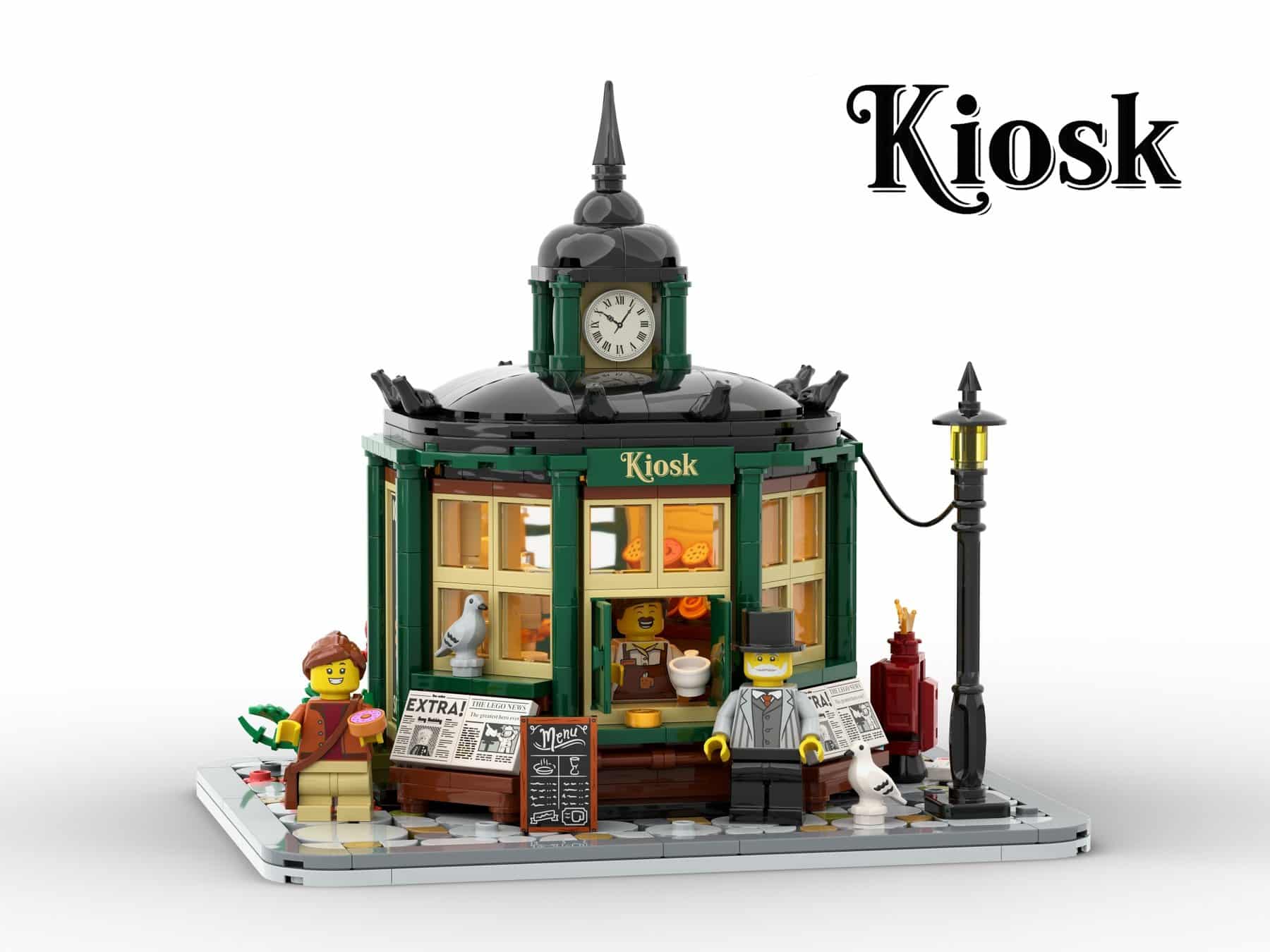
Kiosk by HostasBuilds is the outlier in the best way. With just 729 pieces and 3 minifigures, it is dramatically smaller than the other finalists, but that could become a real advantage once crowdfunding begins. Not every BrickLink buyer wants another near-3,000-piece commitment, and this Paris-inspired newspaper stand offers a more compact, character-driven alternative.
The model takes inspiration from historic Parisian kiosks and newsstands, but softens the usual dark tones with warmer colors. The build includes coffee, pastries, newspapers, a side post box, and a few pigeons for extra street realism. It sounds modest on paper, yet the concept has a lot of charm and could slot neatly into a city display while also standing alone as a small vignette-style showcase piece.
If pricing lands sensibly, Kiosk may end up being the stealth contender of Series 10. It is not trying to outscale the others. Instead, it offers atmosphere, accessibility, and a subject that is unusual enough to feel memorable.
Series 10 now heads toward refinement before the February 2027 sale
What makes this Series 10 finalist slate interesting is not just the quality of the individual entries, but the balance between them. There is no obvious duplicate concept here. Each finalist targets a different segment of the adult LEGO audience, which should make the crowdfunding phase more competitive than usual.
Between now and the February 1, 2027 crowdfunding launch, these projects will move through the refinement process with BrickLink and the LEGO Group. That stage can still lead to visible adjustments in colors, building techniques, and overall polish, so the final products may not look exactly like the current presentation images. Even so, the core identities of the five sets already feel well established.
Fans who want to study all five finalists in detail can view the full BrickLink Designer Program Series 10 page. For now, the main takeaway is simple: Series 10 has delivered one of the more varied finalist waves in recent memory, and the race toward crowdfunding in early 2027 should be worth watching closely.